
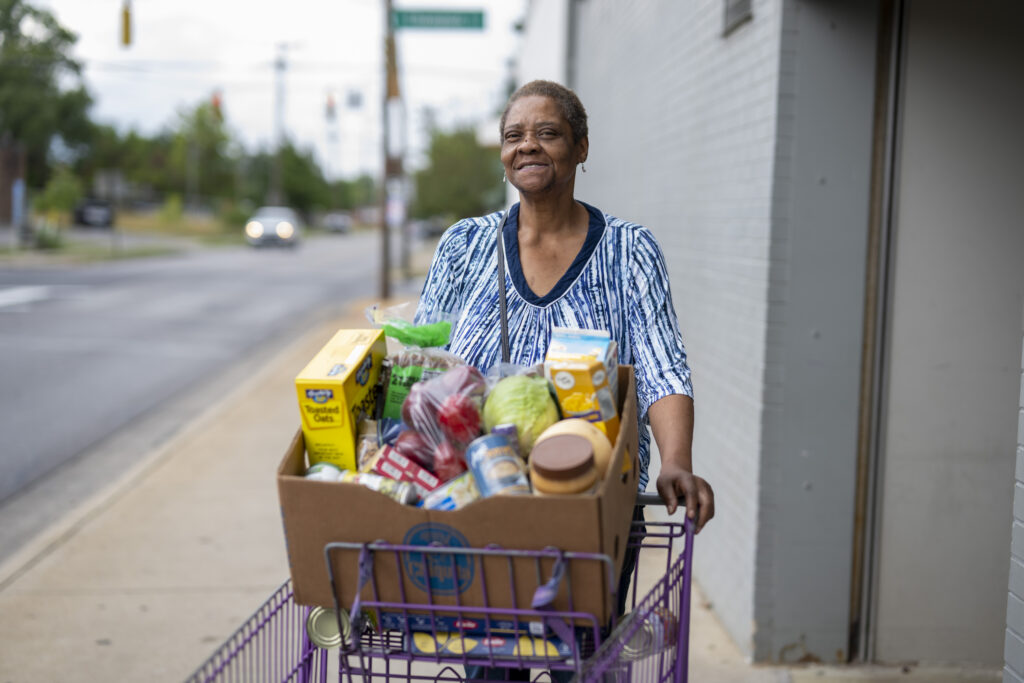
Have you ever used the terms “food bank” and “food pantry” interchangeably? You’re not alone. While both are essential in the fight against hunger, they each have unique roles. In this article, we’ll break down the difference between a food bank and a food pantry, from how they operate to the communities they serve, so you can better understand the collaborative system that ensures food gets to those who need it most.
What is a Food Bank?
A food bank is a distribution center, usually with a massive warehouse, that serves a specific region. While they don’t typically provide food directly to neighbors in need, they are the main provider for many smaller partners, usually called food pantries.
Of the 12 regional food banks in Ohio, the Mid-Ohio Food Collective (MOFC), located in Grove City, serves the 20 counties making up the Columbus area. In 2024, MOFC distributed more than 83 million pounds of food through both their food bank and multiple food pantries. That’s about 193,000 meals every day across central and eastern Ohio.
As big as three football fields, MOFC’s warehouse can hold 7 million pounds of food, which it gets from donations, grocery stores, food manufacturers, farmers, government programs and more. But the food doesn’t stay in the warehouse for long — especially fresh produce, which needs to get to the food pantries as soon as possible.
What is a Food Pantry?
Much smaller than food banks, food pantries are focused on serving a particular community or neighborhood but receive support from food banks. In Columbus, food pantries get food from MOFC and other sources that they then distribute to eligible people in their local communities. While many pantries are stationary buildings, many also offer mobile food pantries or even online ordering for pick up, like LSS Food Pantries.
To find a food pantry near you, MOFC offers a helpful resource on their website where you can insert your zip code and find food pantries closest to you. LSS Food Pantries also has a helpful list of locations for their food pantries, mobile distributions and drop-in produce distribution sites. To make sure you’re eligible for food assistance, check out this helpful resource from LSS Food Pantries.
In the end, what truly matters is the shared mission of both food banks and food pantries: to ensure no one in our community goes hungry. By understanding their distinct yet interconnected roles, we can better appreciate the complex, compassionate network tirelessly working to feed our neighbors in need. Whether you’re a donor, a volunteer or someone in need of food assistance, knowing the difference empowers us all to be more effective allies in this vital effort.